How to Study for Organic Chemistry by Rebuilding Reactions
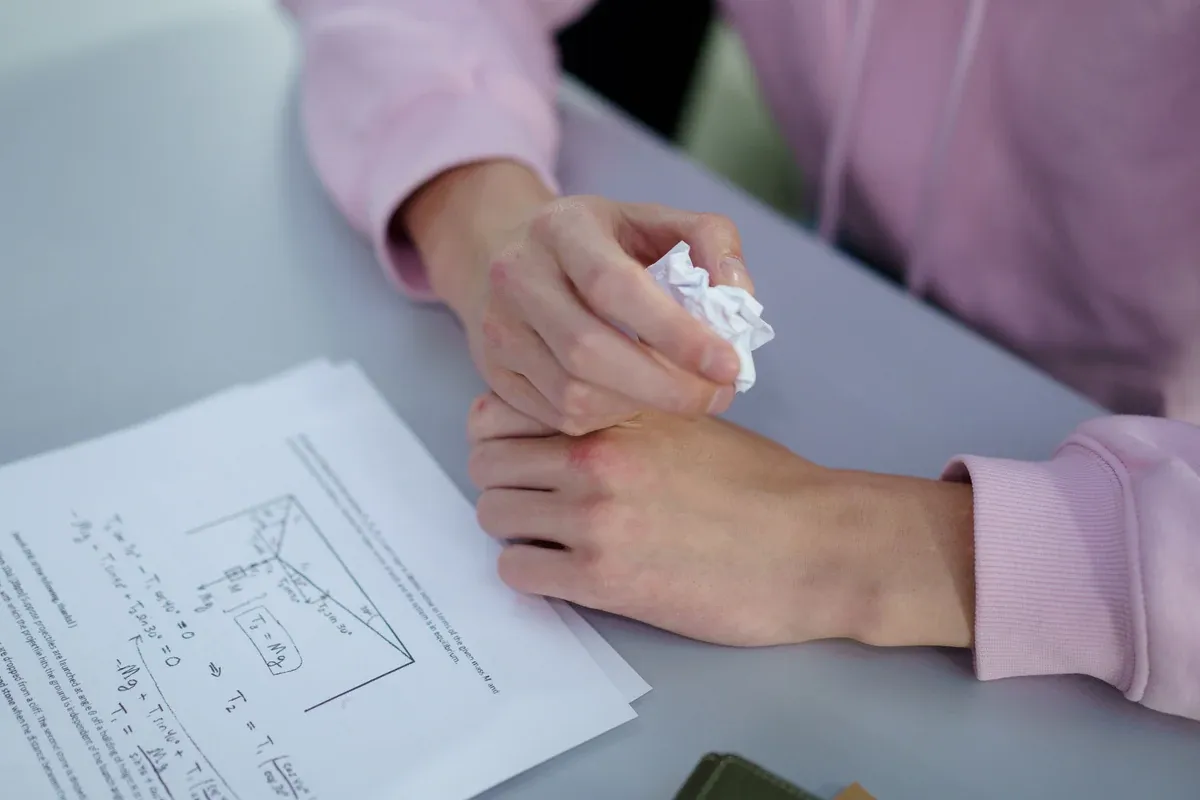
Study for your organic chemistry exam by rebuilding one assigned reaction with your notes closed, checking each step against a course-authorized source, and turning the first meaningful error into a changed prompt. Start with one reaction, mechanism, product prediction, or explanation from the upcoming exam's scope, rather than trying to recall an entire chapter at once.
A closed-notes reconstruction is retrieval practice rather than rereading. In experiments using prose passages, prior testing produced better delayed retention than repeated restudy, while repeated restudy performed better after five minutes. These were not organic chemistry course trials, so use retrieval to expose and revisit gaps rather than treating it as a guaranteed shortcut.
Keep the evidence in proportion Retrieval is the starting move, not the whole plan. The source check and changed prompt matter because an uncorrected attempt can leave you practicing the wrong step. Make the attempt first, inspect the correction, and then test the corrected idea in a slightly different assigned situation.

Build a reaction map from the actual exam scope
Collect the exam objectives, review sheet, assigned problems, lecture notes, and relevant textbook sections. Keep only reactions that appear in those materials. Put interesting but unassigned reactions in a parking list so they cannot consume the study time available before this exam.
- Assigned reaction or problem type, written using your instructor's terminology.
- Course concept illustrated, such as substitution mechanism, stereochemical outcome, substrate structure, nucleophile, leaving group, or solvent.
- Required output, such as drawing a mechanism, predicting a product, selecting conditions, or explaining an outcome.
- Authorized checking source, preferably an instructor solution, assigned text, or another course-approved source.
Do not treat the example labels as a universal organic chemistry blueprint. Copy the categories used in your course. If your professor organizes reactions by mechanism family, use that structure. If the objectives distinguish substrate effects or stereochemical outcomes, make those separate practice targets instead of burying them under one broad reaction name.
Run one closed-notes reconstruction loop
- Choose one assessed target Pick one reaction card and copy only the prompt onto blank paper. Your target might be a mechanism, product prediction, stereochemical outcome, or short explanation. Do not choose an entire chapter.
- Rebuild it with notes closed Draw or write the complete response you would give under exam conditions. Mark uncertain decisions with a small question mark, but commit to an answer before opening the source.
- Explain each required step State why each step follows, what changes, and which course concept controls the choice. Keep the explanation aligned with the assessed outcome. If the prompt asks only for a product, do not turn the session into an unnecessary essay about every possible pathway.
- Compare against an authorized source Use the instructor's solution when one is available. Otherwise, check the assigned textbook or another course-authorized solution. Compare the reasoning and notation, not only the final product.
- Capture the first meaningful mismatch Write down the earliest point where your answer departed from the checked solution. A missed variable near the beginning often explains later errors, so log that point rather than copying the entire solution.
Your explanation is a diagnostic tool, not a performance. Self-explanation can help when the prompt matches the intended learning outcome, but it is not universally better than every alternative. If talking through every detail makes you lose sight of the tested decision, shorten the explanation to the variable, rule, and consequence your course expects.
See the loop in an assigned SN2 example
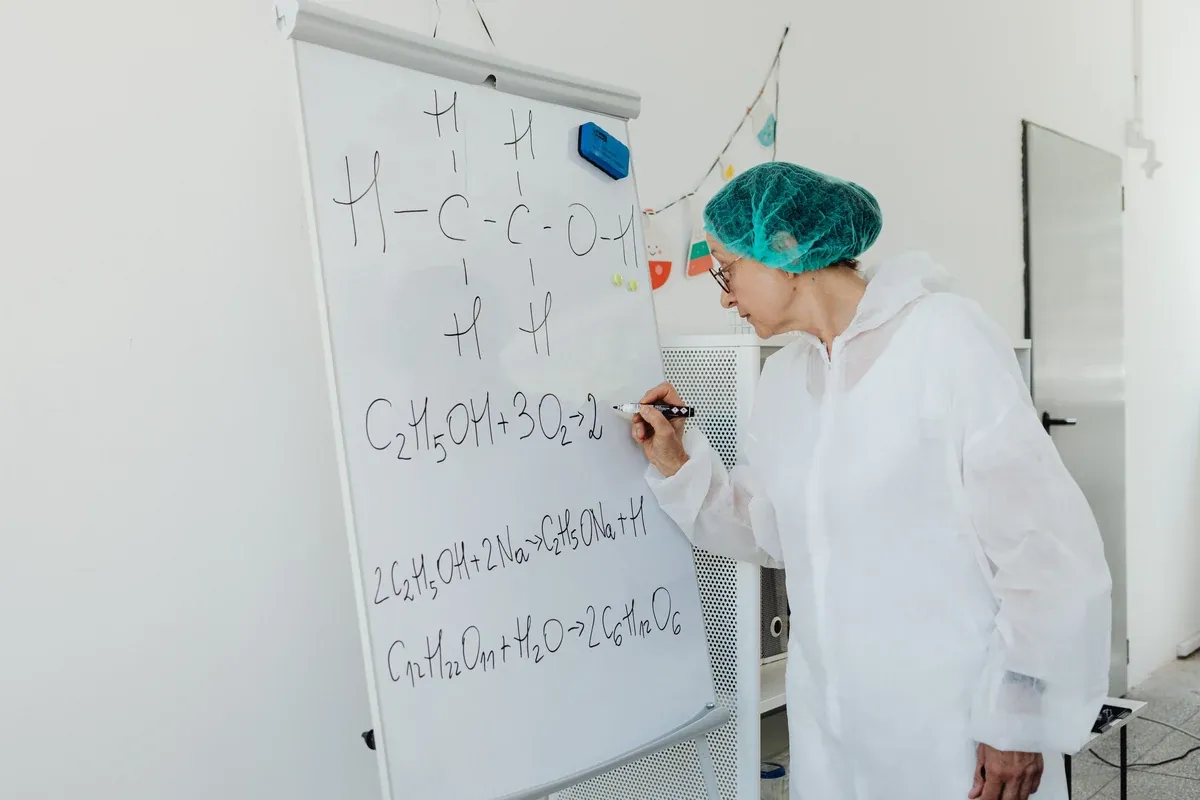
Use this illustration only if SN2 is part of your assigned syllabus. Suppose an assigned problem shows an SN2 reaction on a primary alkyl halide and asks for the mechanism and stereochemical consequence. Close the source, draw the response, and explain it using the notation taught in your course.
- Did you identify the reacting carbon, nucleophile, and leaving group?
- Did you show the nucleophile approaching opposite the leaving group?
- Did you represent formation and breaking of the bonds as simultaneous parts of a one-step pathway without an intermediate?
- If the reacting carbon requires a stereochemical result, did you show inversion of configuration?
Imagine that your drawing includes a carbocation intermediate. Your source check shows that the assigned SN2 pathway is concerted and has no intermediate. Do not copy the full correct drawing five times. Record the misunderstood step, then make a prompt that tests whether you can recognize when the pathway applies.
- Target attempted. Assigned SN2 mechanism on a primary alkyl halide.
- First missed step. I drew a carbocation intermediate.
- Source-checked correction. The pathway occurs in one step, with bond formation and bond breaking happening together.
- Changed prompt. Change the substrate to a tertiary alkyl halide and explain why the same SN2 pathway does not apply.
The changed prompt matters because it asks you to use the corrected idea under a new condition. In this illustration, increased steric hindrance means a tertiary substrate does not follow the same SN2 mechanism. For your actual exam, change only a variable your instructor has assigned and use the course's framework for any competing pathway.
Let the error determine what you practice next
The pathway or controlling variable was wrong
Change one assigned variable and attempt a closely related prompt next.
- Keep the original source nearby for the later check.
- Write the expected variable before drawing so you can see whether the reasoning changes.
The reasoning was right but the notation was wrong
Redraw once using the instructor's convention, then move on.
- Do not spend a full session making the page neat.
- Record the notation mismatch only if it is likely to recur.
The response matched the checked source
Move to a contrasting assigned example instead of repeating the identical prompt.
- Change one relevant condition or compare it with a nearby reaction family.
- Keep the required output consistent with the exam objective.
The sources appear to disagree
Pause this item and seek course clarification before memorizing either answer.
- Save the question for office hours, a discussion section, or an instructor-approved course forum.
- Continue with another assigned item while waiting.
If you want an extra recognition check after doing the written mechanism work, Testopia is our product and its PDF to quiz generator is one optional route. The product page says users can upload a PDF, DOCX, or PPTX lecture file to generate a multiple-choice quiz based on that file and view explanation notes based on the source file. Use those questions as a supplement to drawing and explaining assigned reactions, not as a replacement for the source check or mechanism practice.
Fit the loop to the days you have left
- With 3 or 4 days left, build the scope map once, prioritize the objectives and mistakes that recur in your assigned work, and complete checked loops rather than trying to make polished notes for every chapter.
- With 5 to 9 days left, rotate among course concept groups. Revisit logged errors through changed prompts before adding unassigned examples.
- With 10 to 14 days left, make an initial pass across the assigned reaction groups, then let the error log concentrate later study blocks on weak decisions and source-checked corrections.
For a sample 30-minute block, spend the opening few minutes selecting one in-scope target and setting up blank paper. Use most of the block for the closed-notes response, explanation, and source comparison. Reserve the final minutes for one error entry and one changed prompt. This is a planning example, not a tested dosage, so adjust it to the length of your assigned problem.
Deprioritize rewriting notes for appearance, collecting reactions outside the syllabus, and reading a complete solution before attempting the problem. Also stop adding explanation when it no longer serves the assessed outcome. Your goal is a short chain of checked decisions that tells you exactly what to practice next.
Open your exam objectives now and circle one assigned reaction. Put the notes away, rebuild the answer, explain the required steps, and check it against the authorized source. Write down the first meaningful mismatch and turn it into the next prompt. If the reaction is outside the exam scope or the source is unclear, stop and choose an item you can verify.
Sources
- Test-enhanced learning: taking memory tests improves long-term retention
- Performance feedback enhances test-potentiated encoding
- Eliciting explanations: Constraints on when self-explanation aids learning
- 11.2 The SN2 Reaction
- 11.3 Characteristics of the SN2 Reaction
- PDF to Quiz Generator | Create AI Tests with Explanations
Photography

Stop rereading. Start testing yourself.
Turn notes and readings into quizzes and flashcards the moment you finish the article.